With winter’s bitter cold, heated floors are no longer a luxury: they have become a must in many homes! Using water, glycol or electricity, this technology keeps your feet warm while keeping your indoor temperature steady, and it can lower your electricity bill too. Before you invest, though, it pays to learn more about how they work.
This article explains how these systems work and what they offer, so you can decide which one is best suited to your home.
- Two possible systems
- What are the main features of underfloor heating?
- Which floor heating system is right for you? Next steps.
Two possible systems
Your underfloor heating system can be either electric or hydronic. Since each one works differently, it is important to choose the one that best suits your home.
Hydronic underfloor heating
A hydronic floor heating system, which can run on water or glycol, lets you adjust the temperature of the circulating fluid for specific uses. The water can be heated by different systems: a propane, natural gas, wood-fired or electric boiler, or solar panels. It works with two types ofthermostats: electronic and connected (Wi-Fi).

Thanks to its energy efficiency, it is becoming increasingly popular as a cost-effective way to heat a home in colder climates: water holds heat longer, so it isn’t lost to the air as quickly. It also needs very little maintenance and is hidden under your floor, so it takes up no valuable space in your home.
This underfloor heating system works by circulating hot water through pipes under your floor, so heat radiates throughout the room from below. Because it creates even, constant heat, it is more comfortable than other forms of heating.
Hydronic heating is an excellent choice for anyone who wants to enjoy a warm home without relying on other forms of heating. Flooring type should be considered, since it works best with certain floors, such as ceramic tile, stone and other non-porous materials that easily absorb and spread heat. Insulation level also matters, as it affects how efficient the system is. Grading and sealing the ground with concrete to keep moisture out is essential if you want to cut energy costs and maintain a comfortable temperature.
Pros and cons of hydronic underfloor heating
Hydronic systems are ideal for new construction, building additions and homes that need more sophisticated heating, as well as those with limited space. They are energy efficient, cost-effective and easy to install.
They require minimal maintenance and are quieter than traditional heating systems such as forced-air furnaces or baseboard heaters.
Highly versatile, they can be installed under all types of flooring, including wood, tile and concrete.
They also save space, since they are completely hidden under the floor. On top of energy efficiency, you get better indoor air quality.
Hydronic heating is energy efficient and can be very cost-effective in the long run, because it generates heat more efficiently than forced-air furnaces. However, installation traditionally requires a certain level of skill, which can make it fairly expensive.
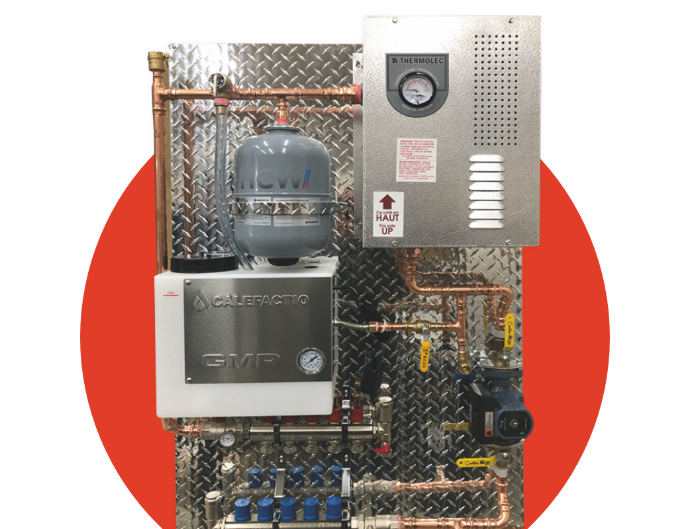
Fortunately, HCW Systems has developed a preassembled kit that lets anyone with basic DIY skills and no prior construction experience install a hydronic system in their home, then lay their favourite floor covering and program the thermostat by following these 8 simple steps.
It is probably the most affordable option on the market, so it is well worth considering!
Electric underfloor heating
An electric system is installed under the floor covering and works by converting electrical energy into heat. A continuous heating wire is laid on a mat sized to the room. Before installing laminate or tile, factor in the installation process, which usually includes an insulation layer under the floor, wiring to an electrical outlet and a protective mat.
Electric floor heating is easier to install in an existing building. It is usually found in bathrooms or kitchens, for extra comfort underfoot.
Pros and cons of electric underfloor heating
It can be connected to a standard or Wi-Fi thermostat. With this type of system, homeowners can easily adjust the temperature and enjoy a comfortable level of warmth.
The system can also be used in areas that are hard to keep warm, such as basements, and it is perfect for bathrooms and kitchens without carpeting.
There are, however, some potential drawbacks to consider. These systems use a considerable amount of electricity, which can mean higher energy costs.
Electric floor heating cannot be installed under cabinets or under wood, vinyl or carpet floor coverings. Running the wires in these areas can cause overheating, which can break the wires and make the system fail. It is also recommended to install extra thermostat sensor wires, so you don’t have to replace sections of your floor to repair damaged connections.
Even in new construction, it must be installed by an electrician, which adds labour costs.
What are the main features of underfloor heating?
Electric and hydronic underfloor heating systems have features that will make some of your friends jealous. Here are the three main ones that make it such an attractive option.
No air movement
One of the main benefits of underfloor heating is the kind of heat it produces. Unlike conventional heating systems, radiant heat starts at the floor and rises slowly, losing only a few degrees by the time it reaches the ceiling. It can also save you 20 to 25% in energy: you won’t pay for heat that builds up at the ceiling (as it does with furnaces)! And since there is no air movement, radiant floor heating is a smart choice for people who are sensitive to dust or have allergies.
More space
The days of wall-mounted heaters are over. A heated floor lets you use 100% of your floor space for furniture, so you can make the most of your interior design.
Adds value to your home
Underfloor heating is a strong selling point that many buyers now consider a must. It lets you recover a significant part of your investment when it is time to sell your property.
Which floor heating system is right for you? Next steps
When choosing a heated floor, several factors need to be considered, including the size of the area to heat, the type of flooring and the level of insulation.
The size of the area affects which type of system to use. Radiant floor heating works by spreading heat evenly, and larger spaces need more heating power than smaller ones.
For small spaces, a single electric element may be enough. A hydronic system, however, can deliver more heat over larger areas, because it offers much higher output.
You now have everything you need to make an informed choice about your heating system. Hydronic underfloor heating is the best way to keep your feet warm, and it makes your living space more comfortable. If you have any questions about our floor heating system, our experts will be happy to help!